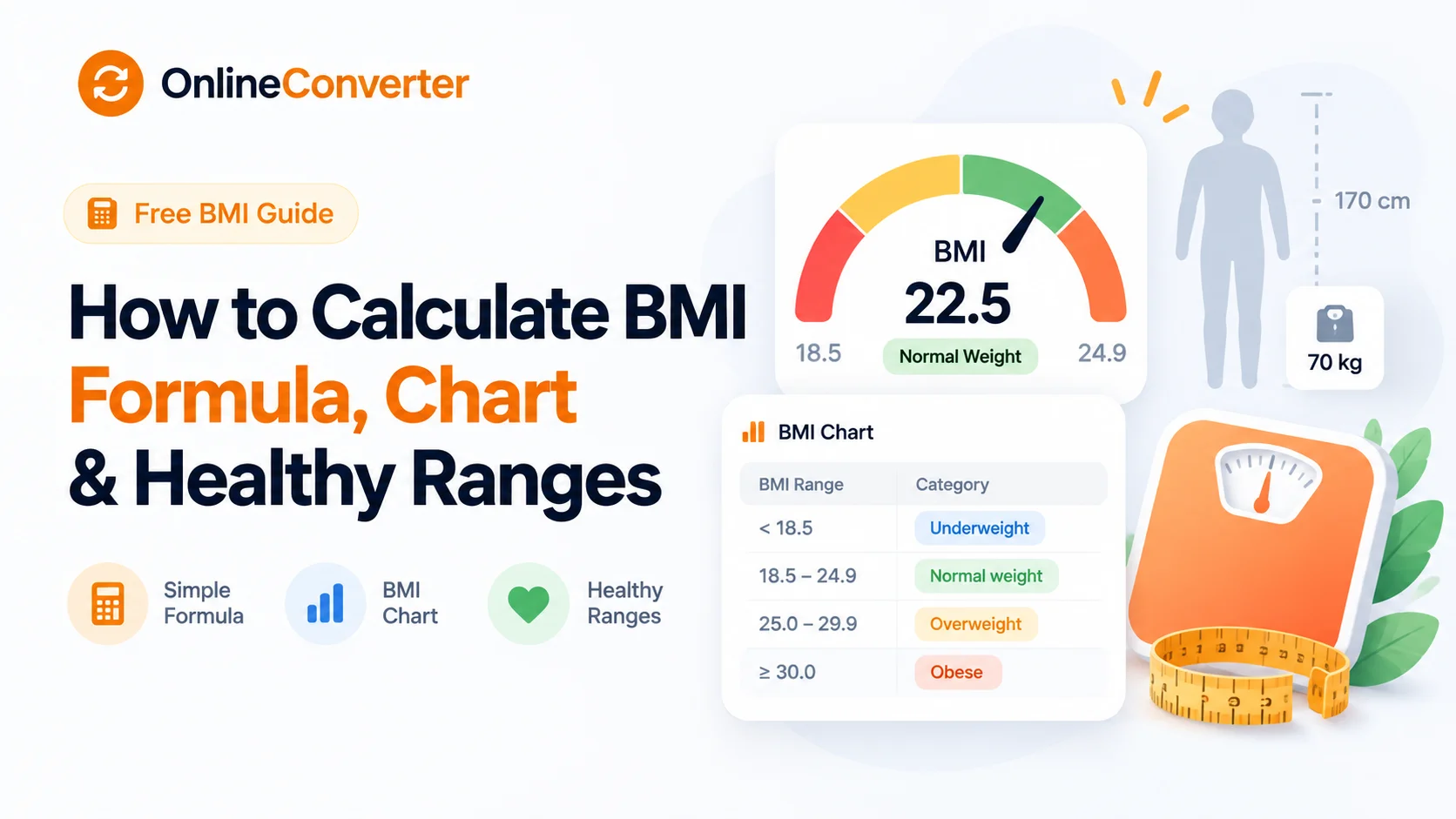
Calculate your body mass index in kilograms and metres or pounds and inches—then see what the number means using standard adult BMI ranges.
Important: BMI is a screening measure, not a diagnosis. It does not directly measure body fat, fitness, or overall health.
Calculate your BMI
Enter your current height and weight to estimate your BMI in kg/m². This calculator is designed for adults aged 20 and over.
Use this BMI calculator: Open BMI calculator
Body mass index (BMI) is a calculation that compares your weight with your height. It is commonly written as kg/m², which means kilograms per metre squared. Many people use it to get a quick sense of where their weight falls on standard adult BMI charts.
The quickest way to use BMI is to follow three steps: calculate your number, compare it with the adult chart, and interpret it carefully. A BMI result can flag a reason to look more closely at health, but it cannot diagnose a medical condition or measure body composition directly.
Adult BMI chart
What BMI range am I in?
These standard categories are generally used for adults aged 20+ and are the same for men and women.
Below 18.5
Underweight
Below the standard adult healthy-weight range.
18.5–24.9
Healthy weight
The standard healthy-weight range for adults.
25.0–29.9
Overweight
Above the healthy-weight range and below the obesity range.
30.0 and above
Obesity
A screening category with additional classes at higher BMI values.
How to calculate BMI
Use the metric formula when you know your weight in kilograms and height in metres. Use the US formula when you know your weight in pounds and height in inches.
Metric formula
BMI in kilograms and metres
BMI = weight (kg) ÷ height (m)²
Example: 68 kg ÷ (1.70 m × 1.70 m) = 23.5 kg/m². This falls within the standard healthy-weight range.
US formula
BMI in pounds and inches
BMI = weight (lb) ÷ height (in)² × 703
Example: 150 lb ÷ (65 in × 65 in) × 703 = 25.0. That is the beginning of the standard overweight range.
What does my BMI result mean?
BMI categories describe where a number falls on a population-based screening chart. They are not a verdict on your health, fitness, appearance, or worth. Two people with the same BMI can have different amounts of muscle, body fat, health risks, and medical histories.
If your BMI is outside the healthy-weight range, it may be helpful to discuss the result with a qualified health professional—especially if you have concerns about nutrition, unintended weight change, blood pressure, blood sugar, or family health history.
Is a healthy BMI different for men and women?
For adults aged 20 and over, standard BMI categories are interpreted the same way for men and women. However, BMI does not directly measure muscle mass, fat distribution, pregnancy status, or body composition, so it may not reflect every individual’s health situation equally well.
What common BMI numbers mean
These examples show how specific values fit the standard adult chart. They are categories, not health diagnoses.
BMI 21
Falls within the standard healthy-weight range.
BMI 25
Marks the start of the standard overweight range.
BMI 27
Falls within the standard overweight range.
BMI 30
Marks the start of the standard obesity category.
What should you weigh for your height?
A BMI chart can estimate a weight range for a given height, but it should not be treated as a personal target by itself. Healthy weight goals depend on many factors, including age, body composition, medications, medical conditions, activity level, and whether weight change is intentional.
BMI and diabetes: what is the connection?
At a population level, higher BMI can be associated with a higher risk of type 2 diabetes and some other health conditions. But BMI alone cannot predict whether an individual will develop diabetes. Family history, blood pressure, blood glucose, diet, activity, sleep, and other factors also matter.
Weight, diabetes, and cancer risk
Weight management is not just about reaching a number on a scale. For people living with diabetes, gradual changes in eating patterns, movement, sleep, stress, and medication routines can support blood glucose management. A health professional can help set realistic goals that fit your circumstances.
Body weight is also one factor associated with the risk of several cancers. BMI is a population-level screening tool—not a personal cancer-risk prediction—and risk is influenced by factors such as age, family history, tobacco, alcohol, activity, diet, and body-fat distribution.
A practical next step: focus on sustainable habits and regular check-ins rather than rapid weight loss or a single BMI target. Ask a clinician or registered dietitian for individualized advice, especially if you have diabetes or take weight-affecting medication.
Limits of body mass index
BMI is useful because it is simple and consistent, but it cannot distinguish between muscle and fat. A muscular person may have a BMI in a higher category without having excess body fat, while someone with a BMI in the healthy range can still have health risks that BMI does not show.
For a fuller picture, clinicians may consider waist circumference, blood pressure, blood tests, eating and activity patterns, medical history, and physical examination. Children and teenagers use age- and sex-specific BMI percentiles instead of this adult chart.
A helpful next step
When should you speak with a clinician?
Consider professional guidance if you have unexplained weight changes, concerns about eating or body image, pregnancy-related questions, a chronic condition, or questions about diabetes and heart health. A clinician can interpret BMI alongside your personal history.
Frequently asked questions
How do I calculate BMI in kg/m²?
Divide your weight in kilograms by your height in metres squared: BMI = kg ÷ m². For example, if you weigh 70 kg and are 1.75 m tall, calculate 70 ÷ (1.75 × 1.75) to get about 22.9 kg/m².
How do I calculate BMI using pounds and inches?
Divide weight in pounds by height in inches squared, then multiply by 703. The formula is: BMI = lb ÷ in² × 703.
Is BMI 26 or 27 high?
BMI values of 26 and 27 fall in the standard adult overweight category. That category is a screening classification, not proof that you are unhealthy. A clinician can help interpret the result in light of your overall health.
Does BMI work for everyone?
BMI is not equally informative for every individual. It can be less accurate for some athletes, older adults, pregnant people, and people with unusual muscle mass or body composition. It is also not the adult calculation used for children and teenagers.